If you’ve ever wondered how to achieve that perfectly flaky, tender crust that holds all your favorite fillings just right, look no further than Grandma’s Pie Crust Recipe. This classic, tried-and-true method brings together simple pantry staples into a buttery, melt-in-your-mouth pie crust that feels like a warm hug from the kitchen. Whether you’re baking a sweet fruit pie or a savory quiche, this crust will be your new secret weapon to impress family and friends with every slice.
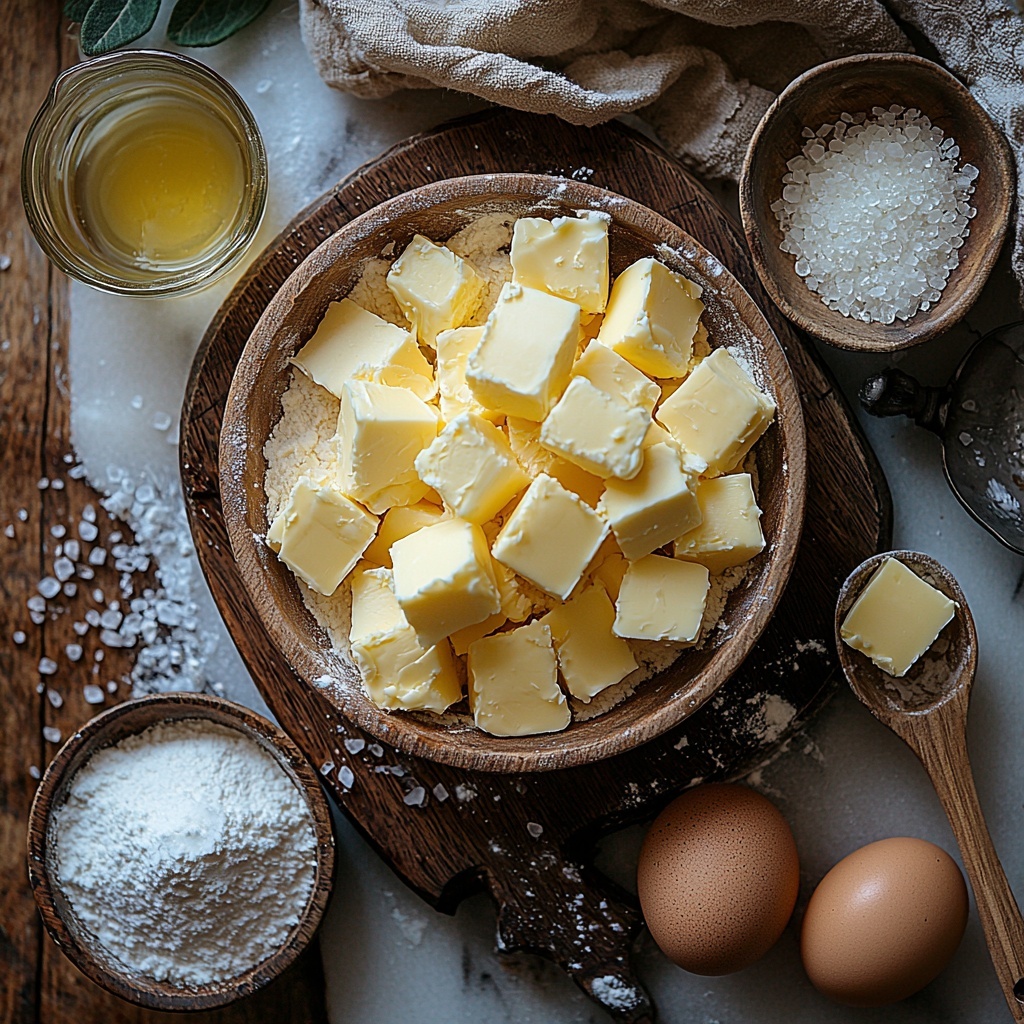
Ingredients You’ll Need
This recipe shines because it uses straightforward ingredients that you likely already have on hand, making it both accessible and essential for a flawless pie crust. Each component plays a vital role in creating that perfect balance of flavor, texture, and structure.
- 2 1/2 cups all-purpose flour: The foundation that provides structure and a tender crumb.
- 1 tsp salt: Enhances the flavor and balances sweetness.
- 1 tbsp granulated sugar (optional): Adds a subtle sweetness perfect for sweet pies.
- 1 cup unsalted butter, very cold and cubed: The magic behind the flaky layers.
- 6 to 8 tbsp ice water: Helps bring the dough together without melting the butter.
- 1 tbsp apple cider vinegar or lemon juice: Tenderizes the dough and adds a subtle tang.
- 1 egg (for egg wash, mixed with 1 tbsp water – optional): Gives the crust a beautiful golden shine when baked.
How to Make Grandma’s Pie Crust Recipe
Step 1: Mix the Dry Ingredients
Begin by whisking together the flour, salt, and sugar in a large bowl until everything is evenly combined. This ensures your pie crust will have consistent flavor and texture throughout.
Step 2: Cut in the Butter
Next, add your cold, cubed butter to the flour mixture. Use a pastry cutter or pulse briefly in a food processor until the mixture resembles pea-sized crumbs. These little butter bits are what create the flaky layers in your crust, so be careful not to overwork the dough here.
Step 3: Add Ice Water and Vinegar
Combine the ice water with the vinegar or lemon juice, then gradually add this liquid to your flour and butter mixture. Stir just until the dough begins to clump; you want it to come together without becoming sticky or overmixed.
Step 4: Form the Dough Discs
Transfer the dough onto a lightly floured surface and gently knead it into a ball. Divide it in two, forming each half into a flat disc. This step sets you up perfectly for rolling out a smooth, even crust.
Step 5: Chill the Dough
Wrap your dough discs tightly in plastic wrap and pop them in the fridge for at least 30 minutes. Chilling relaxes the gluten and keeps the butter chilled, both essential for that tender, flaky outcome.
Step 6: Roll Out the Dough
On a lightly floured surface, roll out one dough disc into a 12-inch circle. Take your time here to avoid tears and ensure an even thickness for baking.
Step 7: Transfer and Shape
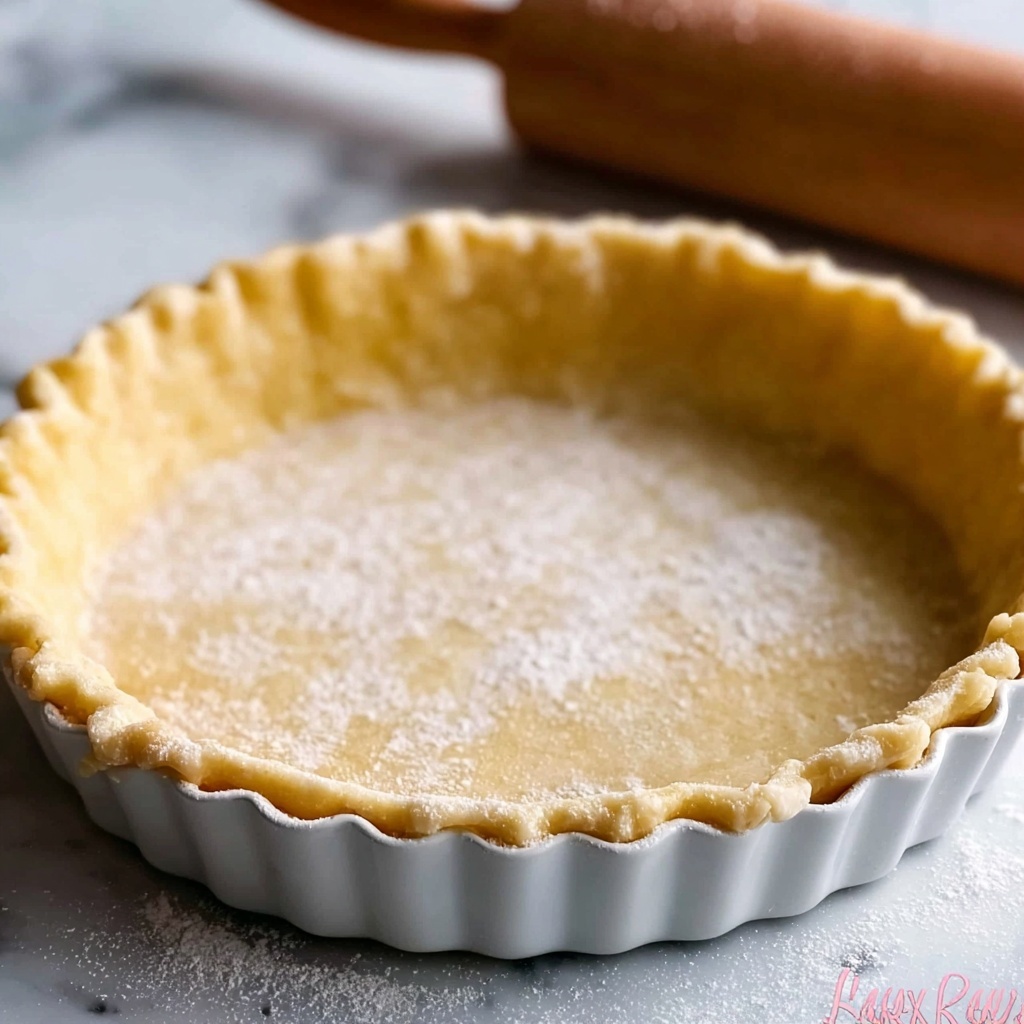
Carefully transfer your rolled dough to a 9-inch pie plate. Gently press the dough into place, being mindful not to stretch it, which could cause shrinkage during baking.
Step 8: Trim and Crimp Edges
Trim away any excess dough around the edges, then fold the edges under and crimp them as desired. This not only looks beautiful but helps hold your filling securely inside.
Step 9: Chill Before Baking
Place your pie crust in the fridge for another 15 to 30 minutes. This final chill sets the shape and keeps the butter cold before baking, which is key to developing those flaky layers.
Step 10: Blind Bake if Needed
If your pie recipe calls for a pre-baked crust, line the dough with parchment paper or foil and fill with pie weights or dried beans. Bake according to your pie’s instructions to ensure a crisp, golden crust free of sogginess.
How to Serve Grandma’s Pie Crust Recipe
Garnishes
Although the crust is the star here, a light egg wash before baking gives it a stunning golden gloss. You can also sprinkle coarse sugar on top for extra sparkle and crunch if making a sweet pie.
Side Dishes
This pie crust pairs beautifully with a vast array of fillings, from rich pumpkin or spiced apple pies to savory quiches filled with creamy cheese and fresh vegetables. Serve with a scoop of vanilla ice cream or a simple mixed greens salad for a complete meal.
Creative Ways to Present
Experiment with decorative crust edges or lattice patterns to elevate your pie’s appearance. You could also bake mini pie crusts using muffin tins for charming individual servings that are just as delicious as the classic large pie.
Make Ahead and Storage
Storing Leftovers
If you have any leftover dough, wrap it tightly in plastic wrap and store it in the fridge for up to 3 days. This allows you to easily roll out another crust without any loss in quality.
Freezing
Grandma’s Pie Crust Recipe freezes beautifully. Wrap each dough disc tightly in plastic wrap and place in a freezer-safe bag. It can be frozen for up to 3 months. Thaw overnight in the fridge before rolling out.
Reheating
Once baked, leftover pie can be reheated in a 350°F oven for about 15 minutes to refresh the crust’s crispness. Avoid microwaving as it can make the crust soggy.
FAQs
Can I use salted butter instead of unsalted?
Yes, but reduce or omit the added salt in the recipe to avoid an overly salty crust. Unsalted butter gives you better control over seasoning.
Why do I need to keep the butter cold?
Cold butter creates steam pockets as it melts during baking, which results in a flaky, tender crust. Warm butter will just blend into the dough, making it tough.
Is the vinegar or lemon juice necessary?
While optional, the acid helps tenderize the dough and prevents gluten formation from making the crust chewy. It adds a nice subtle tang without tasting sour.
Can I make pie crust without a food processor?
Absolutely! You can use a pastry cutter, two knives, or even your fingers to incorporate the butter into the flour. Just be careful not to overwork the dough.
How can I tell if my pie crust is overworked?
If the dough feels too elastic or springs back when rolled, it’s a sign it’s been overmixed and gluten has developed. This can lead to a tougher crust after baking.
Final Thoughts
Grandma’s Pie Crust Recipe is more than just a dough; it’s a reliable, comforting classic that brings heartwarming nostalgia to every bite. With its simple ingredients and foolproof steps, it’s the perfect base for all your favorite pies, sweet or savory. I can’t wait for you to try it and create memories just like Grandma did, one delicious slice at a time.
Print
Grandma’s Pie Crust Recipe
- Prep Time: 15 minutes
- Cook Time: 20 minutes
- Total Time: 35 minutes plus chilling time
- Yield: 2 pie crusts
- Category: Baking
- Method: Baking
- Cuisine: American
Description
Grandma’s Pie Crust is a classic, flaky pastry dough perfect for all your favorite pies. Made with simple ingredients like cold butter, flour, and a touch of vinegar or lemon juice, this versatile crust achieves a tender texture with a beautifully golden finish. Ideal for both sweet and savory pies, it requires chilling and can be blind baked for a crisp base.
Ingredients
Dry Ingredients
- 2 1/2 cups all-purpose flour
- 1 tsp salt
- 1 tbsp granulated sugar (optional)
Wet Ingredients
- 1 cup unsalted butter, very cold and cut into cubes
- 6 to 8 tbsp ice water
- 1 tbsp apple cider vinegar or lemon juice
Optional Egg Wash
- 1 egg, beaten with 1 tbsp water
Instructions
- Combine Dry Ingredients: In a large bowl, whisk together the all-purpose flour, salt, and granulated sugar until evenly combined to ensure consistent flavor and texture.
- Cut in Butter: Add the cold unsalted butter cubes to the flour mixture. Use a pastry cutter or food processor to blend until the mixture resembles pea-sized crumbs, which helps create the flaky layers in the crust.
- Add Liquid: Mix the ice water with the apple cider vinegar or lemon juice. Gradually add this liquid to the flour and butter mixture, stirring gently just until dough clumps begin to form, being careful not to overwork.
- Form Dough: Turn the dough out onto a lightly floured surface. Gently knead it into a cohesive ball, then divide it into two equal portions and shape each into a disc for easy rolling later.
- Chill Dough: Wrap each dough disc tightly in plastic wrap and refrigerate for at least 30 minutes to firm up the butter and hydrate the flour, which enhances the dough’s texture.
- Roll Out Dough: On a lightly floured surface, roll one disc into a 12-inch circle, preparing it to fit a 9-inch pie plate.
- Transfer to Pie Plate: Carefully transfer the rolled dough to the pie plate, being gentle to avoid stretching the dough out of shape.
- Trim and Crimp Edges: Trim any excess dough, fold the edges under, and crimp them as desired to create a decorative and secure crust edge.
- Chill Again: Place the prepared pie crust back in the refrigerator and chill for an additional 15 to 30 minutes to maintain its shape before baking.
- Blind Bake (if needed): If your recipe calls for a pre-baked crust, dock the bottom with a fork, line with parchment paper or foil, fill with pie weights or dried beans, and bake at 375°F (190°C) for about 15 to 20 minutes until golden and cooked through.
Notes
- Use very cold butter and ice water to keep the dough tender and flaky.
- Do not overmix or overknead dough to prevent a tough crust.
- The apple cider vinegar or lemon juice helps tenderize the gluten for a more delicate texture.
- Chilling the dough is crucial for preventing shrinkage during baking.
- Blind baking is essential for custard or cream pies to avoid a soggy bottom.
- Egg wash is optional but adds a beautiful golden color and slight sheen to the crust.